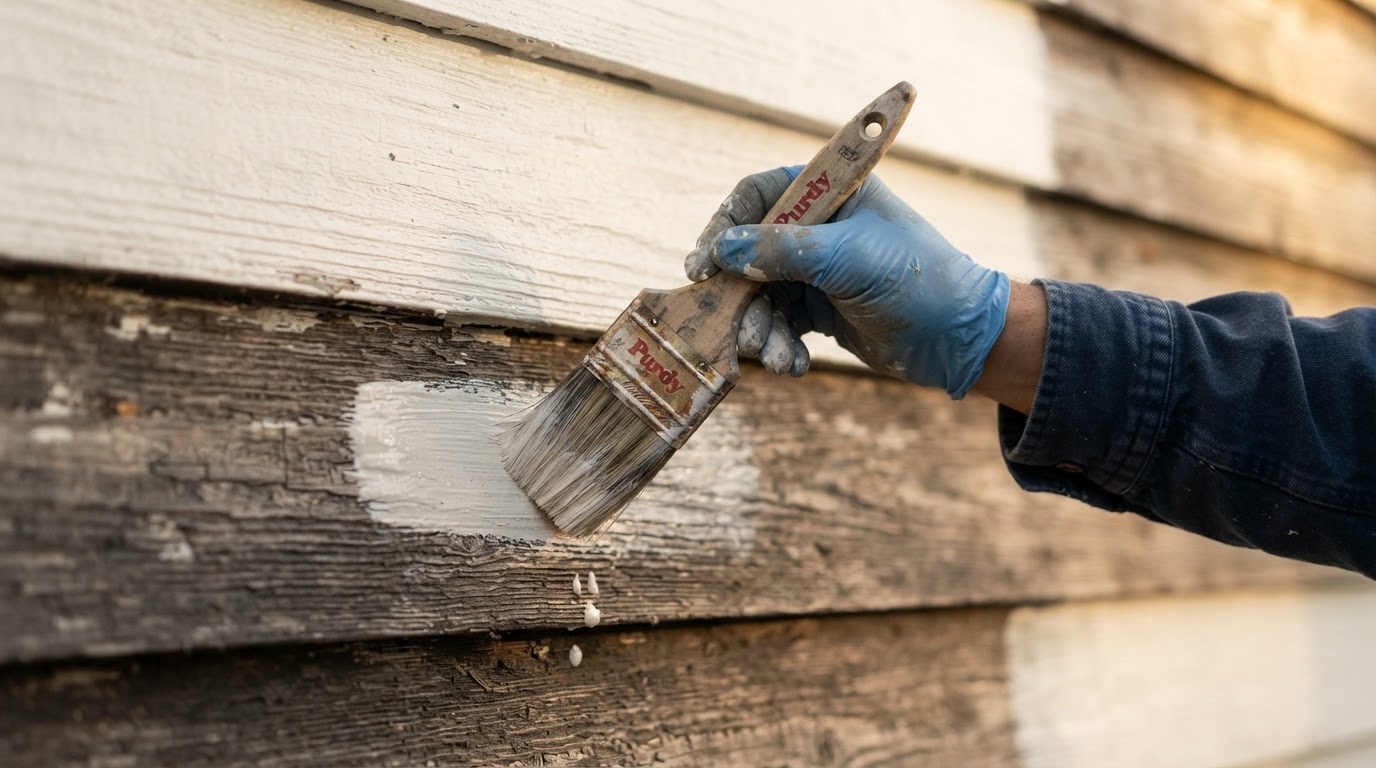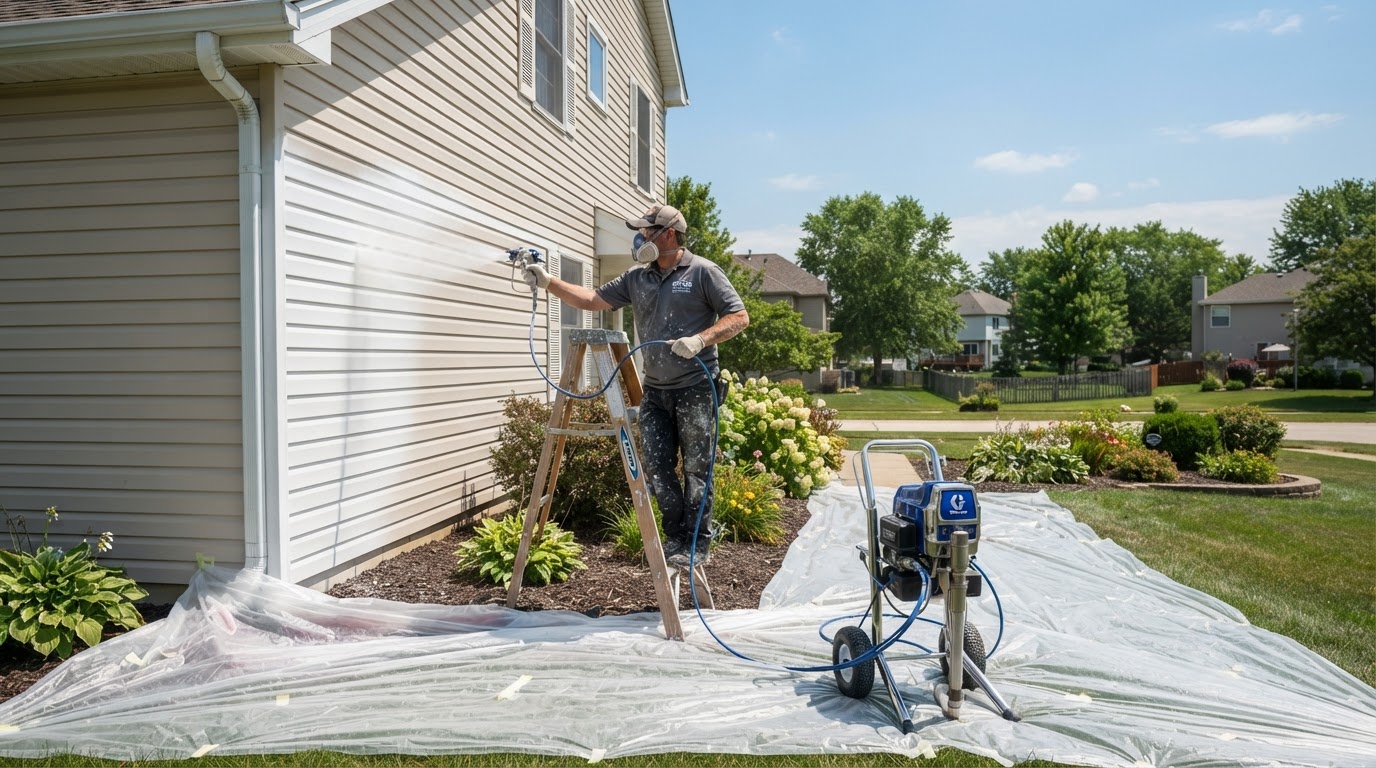

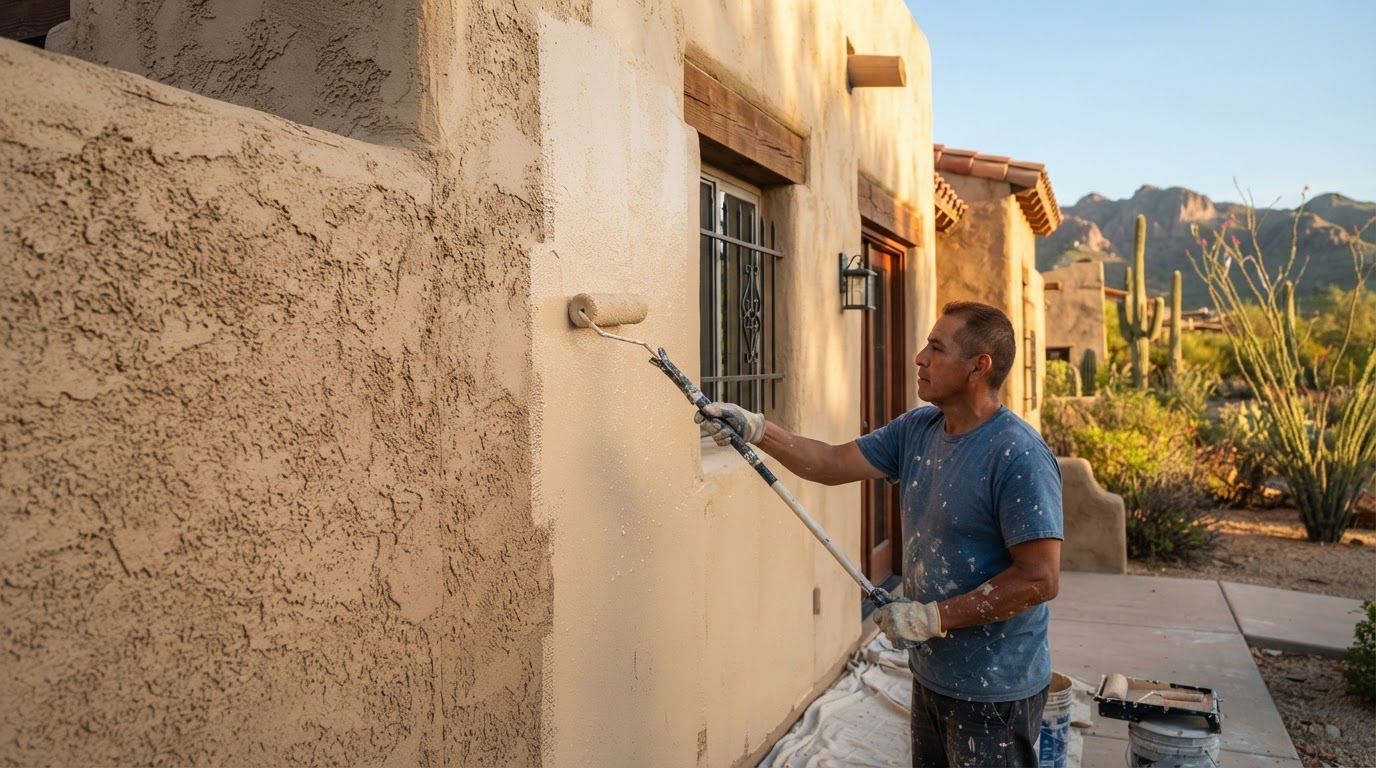
Primer is the bond between your surface and the topcoat. Skipping it on bare wood, repairs, or stained areas is a leading cause of early paint failure.
What Primer Actually Does
Primer creates a bondable, uniform surface for the topcoat. It seals porous substrates so they do not absorb finish paint unevenly, and it promotes adhesion on surfaces that paint alone would not grip reliably.
Primer also blocks stains and tannins from migrating through the finish, which is critical on cedar, redwood, and water-stained areas.
When Primer Is Essential
Bare wood always needs primer, as do repaired and patched areas, spots where old paint has been removed down to the substrate, and any stained or water-damaged sections. New masonry and stucco require masonry primer to manage high alkalinity.
Repainting over a sound, existing coating in the same color may not require full priming—but spot priming of bare areas is still necessary.
Matching Primer to the Surface
Acrylic latex primers work well on most wood and siding. Alkyd and stain-blocking primers are the choice for tannin-rich woods and stubborn stains. Masonry primers handle the alkalinity of new stucco and concrete.
Using the wrong primer can cause adhesion failure or discoloration, so a knowledgeable painter matches the product to the substrate rather than using a single all-purpose primer everywhere.
Primer and Coating Warranty
Many premium paint warranties require the correct primer system. A contractor who skips primer to save time may also forfeit the product warranty that protects your investment.
Find painting companies in our directory that itemize priming in their preparation process.