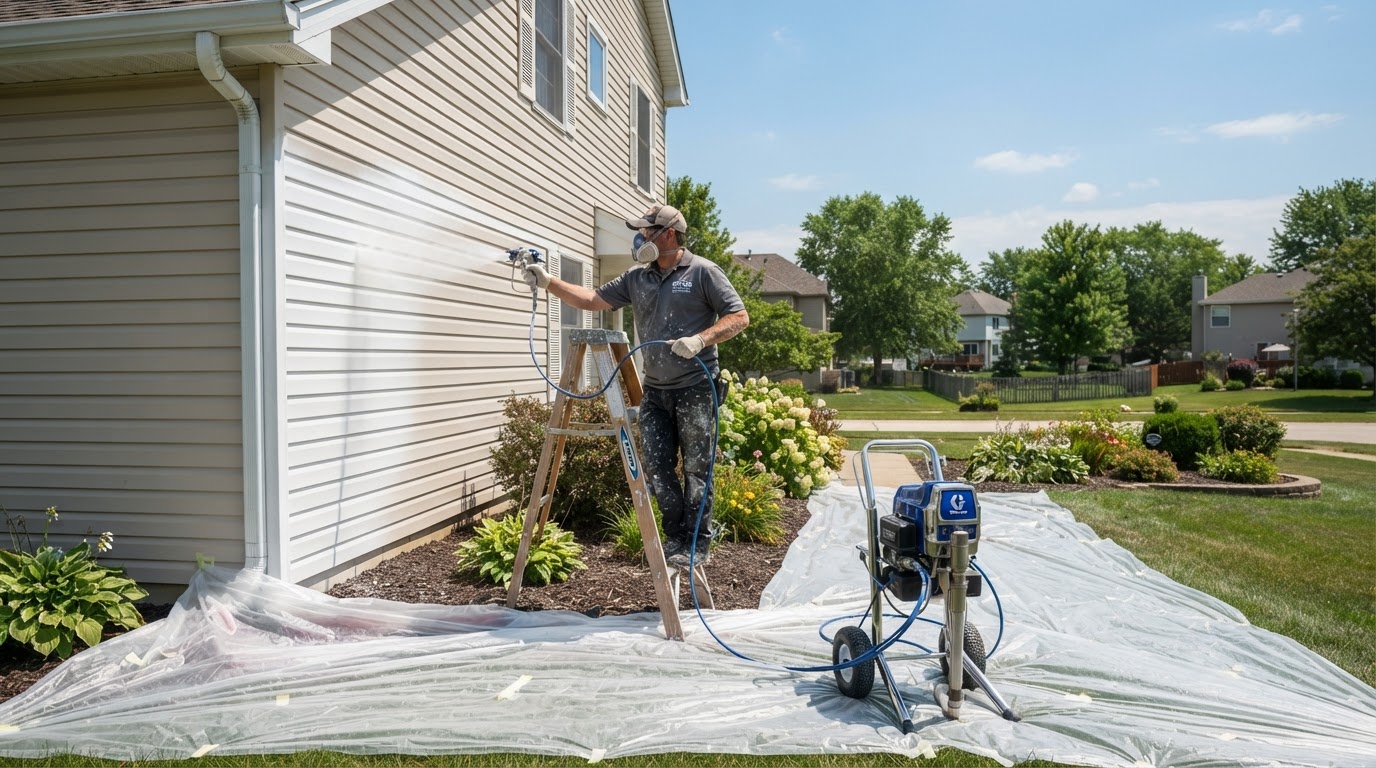

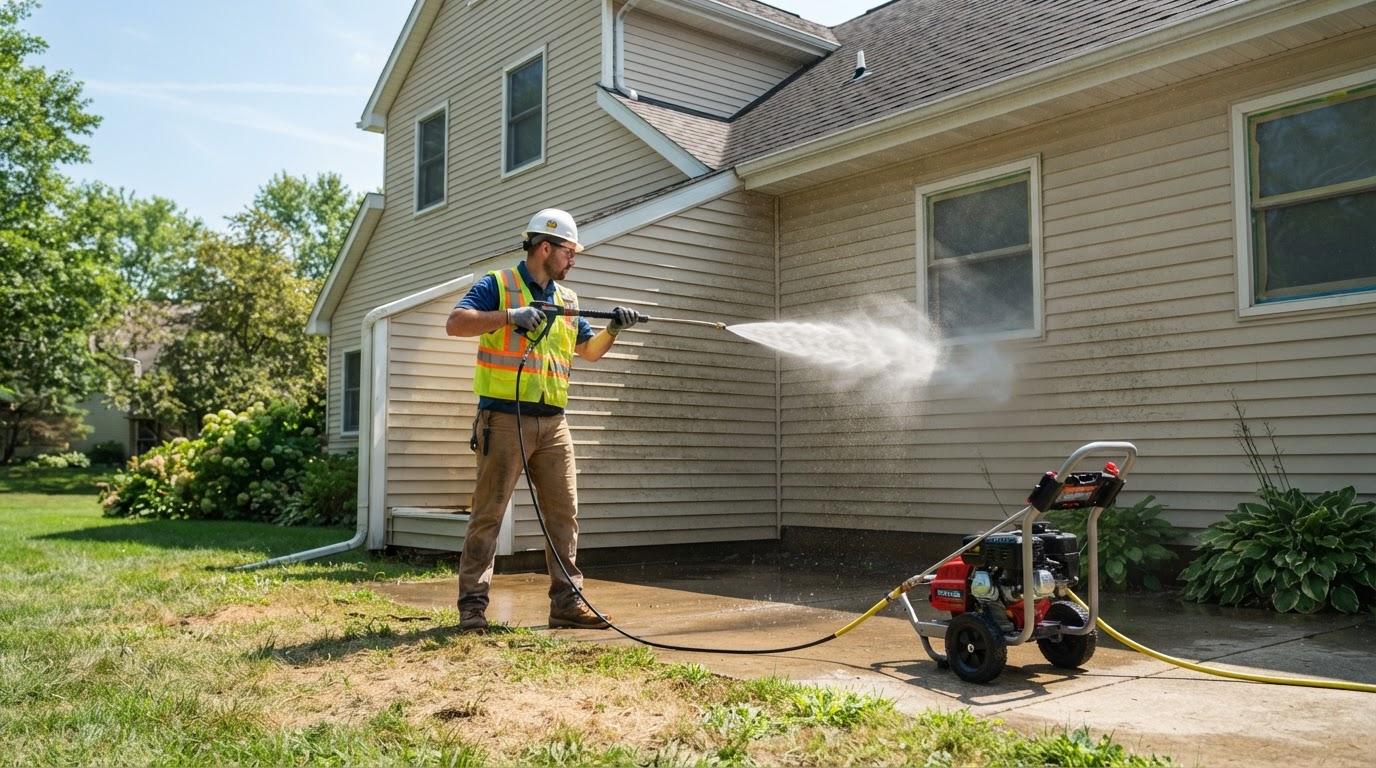
Pressure washing is the foundation of a lasting paint job—but done wrong, it damages siding. Learn the difference between pressure washing and soft washing.
Why Washing Comes First
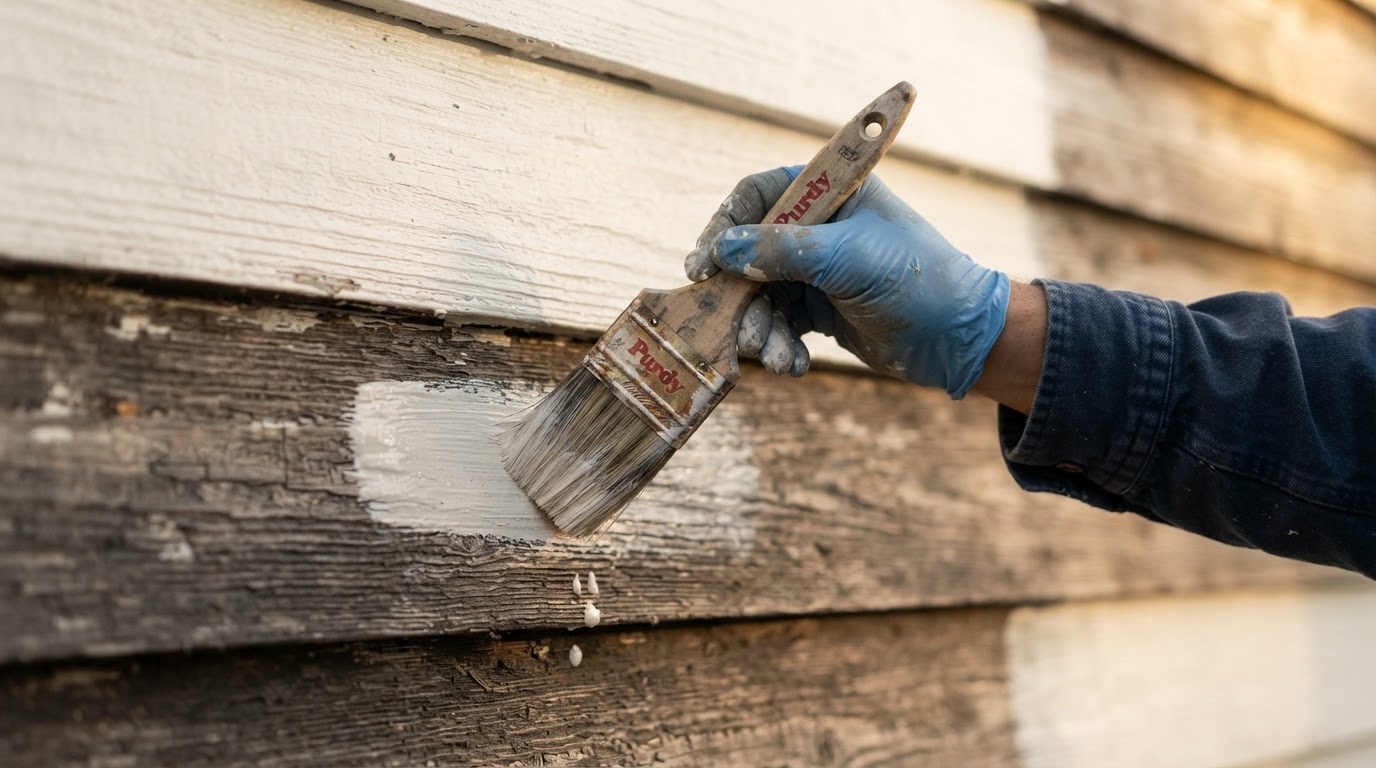
Paint adheres to a clean surface. Dirt, pollen, mildew, and chalking on siding form a barrier that prevents new paint from bonding. Washing removes these contaminants so the coating grips the substrate rather than a layer of grime.
Washing also reveals the true condition of the siding—exposing soft spots, loose boards, or hidden damage that must be repaired before painting begins.
Pressure Washing vs. Soft Washing
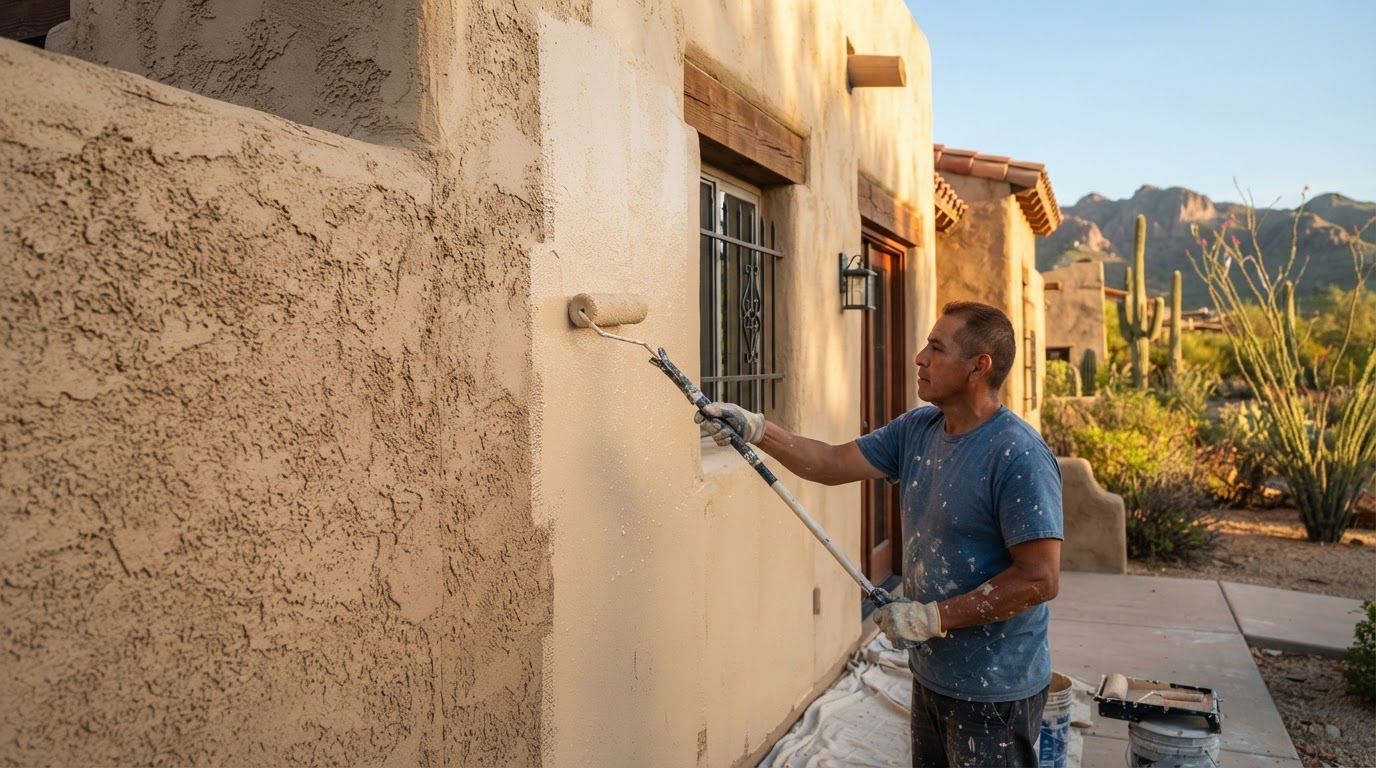
Pressure washing uses high-pressure water to blast away debris. It is effective on durable surfaces like stucco and metal but can force water behind siding, crack vinyl, or damage wood if used carelessly.
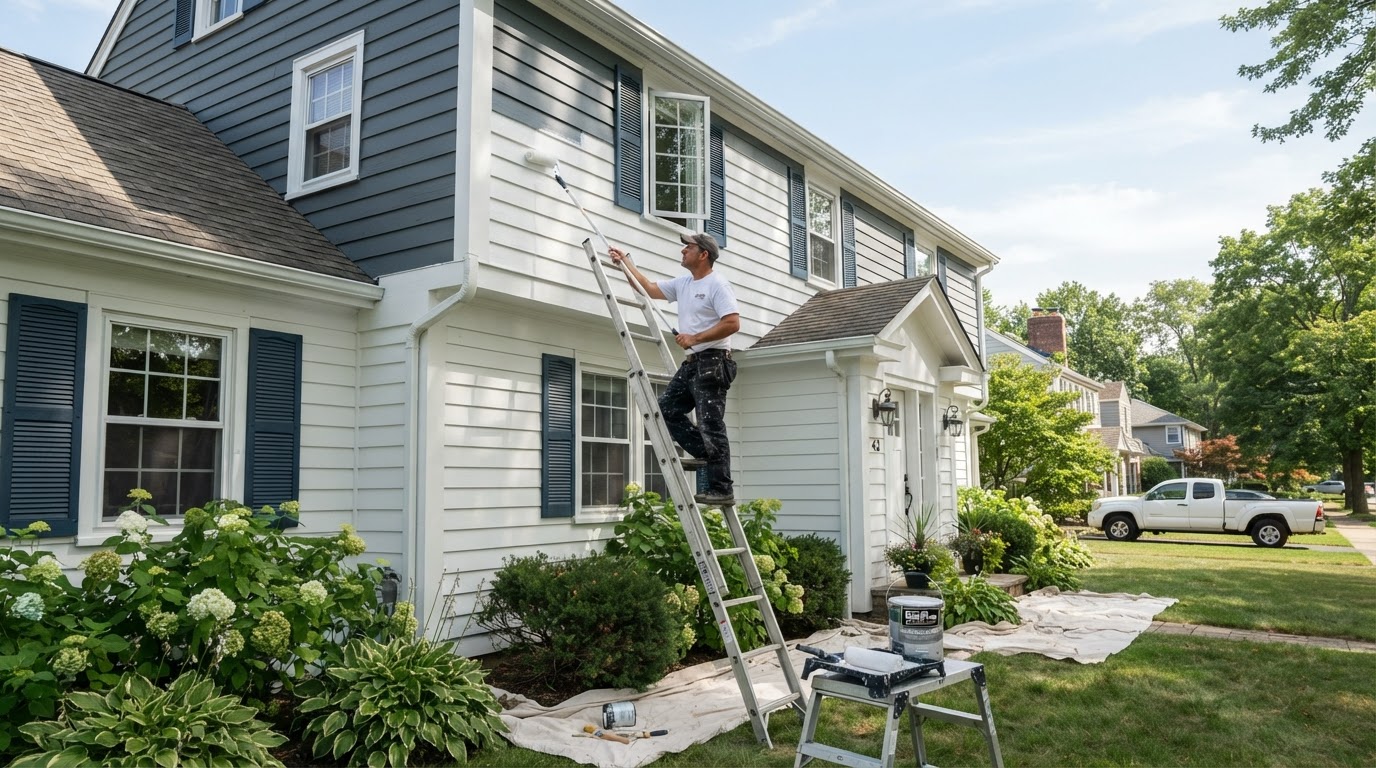
Soft washing relies on low pressure combined with cleaning solutions that kill mildew and break down grime. It is the safer choice for vinyl siding, painted wood, and older surfaces, and is increasingly the professional standard.
Cleaning Solutions Matter
For mildew-prone exteriors, a bleach-based or commercial mildicide solution is necessary to kill the organisms at the surface; pressure alone smears them. Detergents help lift dirt so it rinses away cleanly.
Professional crews select the cleaning method based on the substrate, the type of contamination, and nearby landscaping, protecting plants from runoff.
Drying Time Before Painting
After washing, the exterior must dry thoroughly—often several days depending on weather and material. Painting over trapped moisture causes blistering as the water tries to escape. A reputable contractor builds drying time into the schedule.
Search our directory for painting companies that include professional surface preparation as part of their process.