
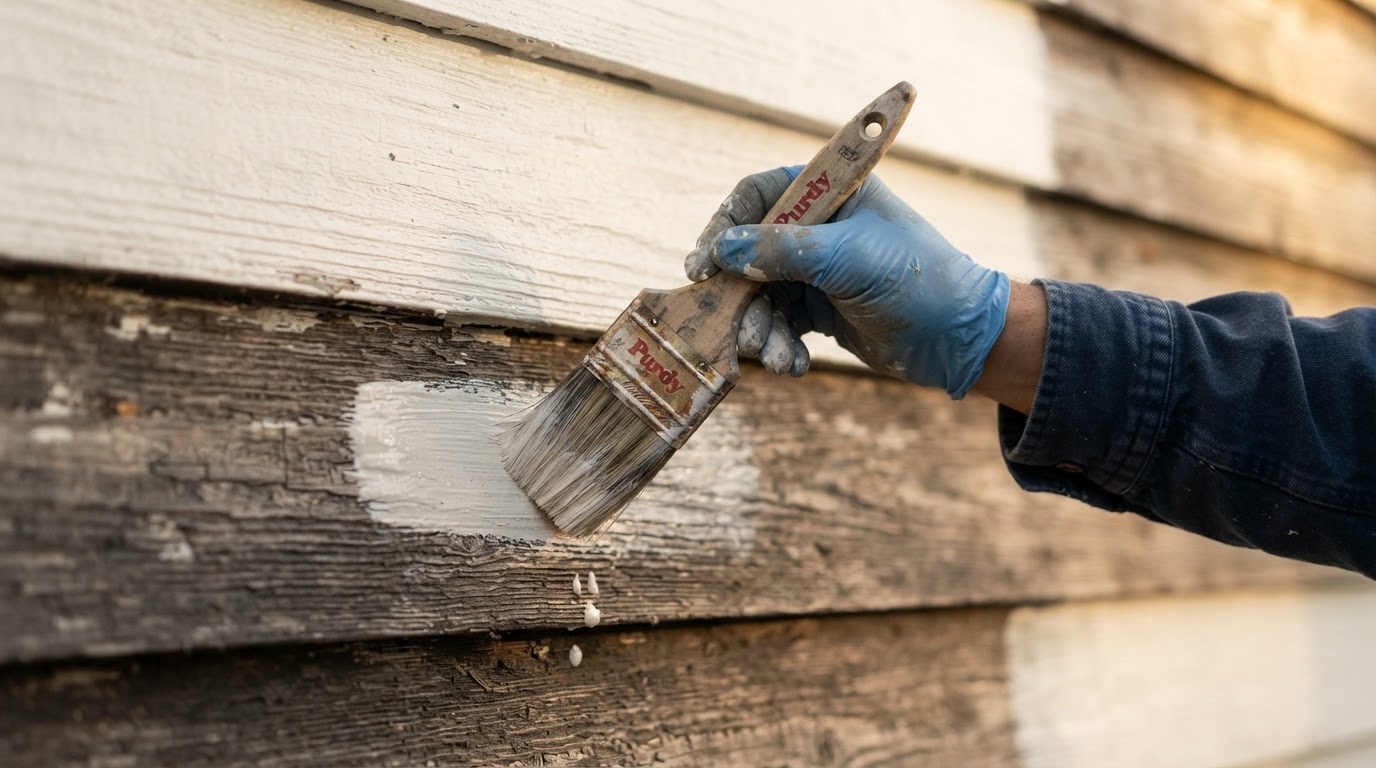
Wood siding rewards careful prep and the right primers. Here is how professional painters extend the life of painted clapboard, shingles, and board-and-batten.
Understanding Wood as a Substrate
Wood siding expands and contracts with moisture and temperature. Paint that adheres well and remains flexible will follow this movement; brittle coatings crack and let water in. The goal of any wood-siding repaint is a coating system engineered for that movement.
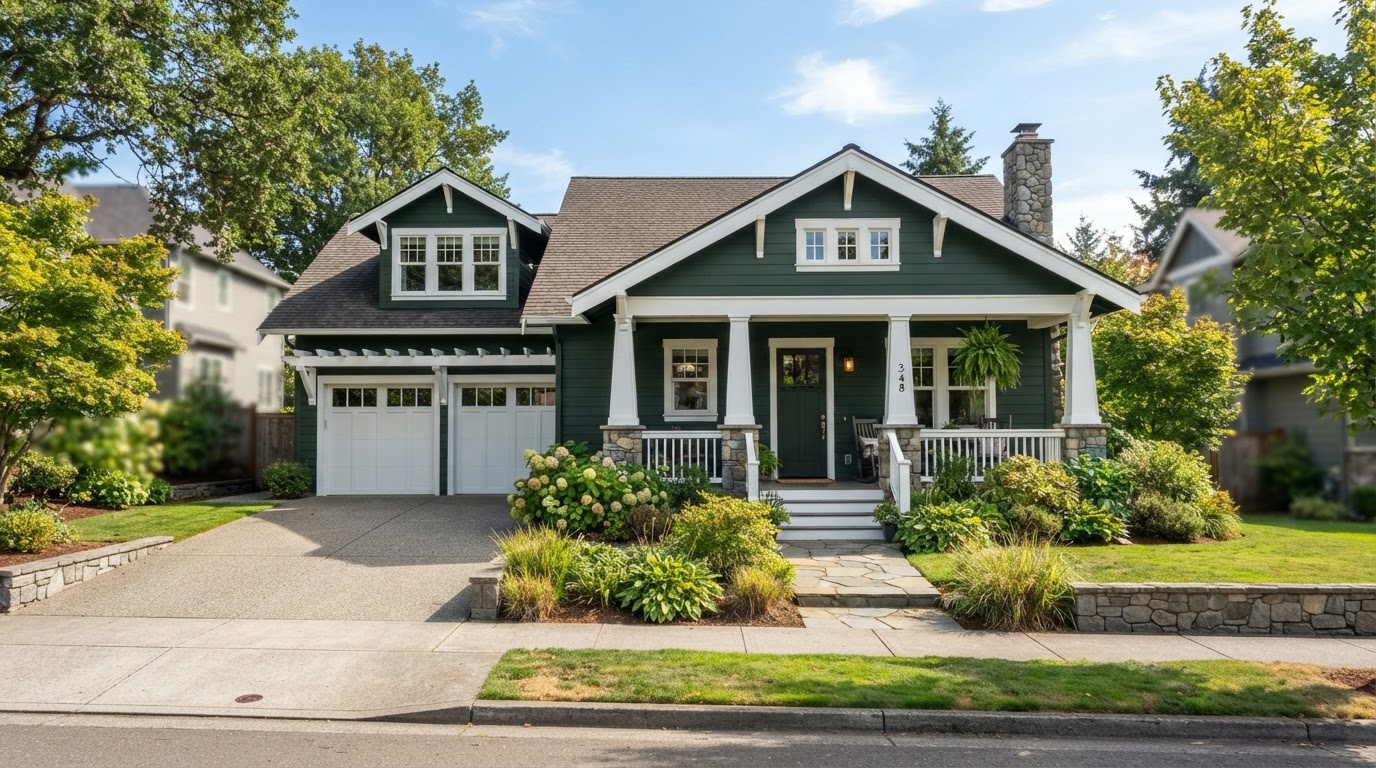
Common wood siding profiles—clapboard, shingles, shakes, and board-and-batten—each present slightly different challenges. Shingles have rough faces that hold stain well, while smooth clapboard shows imperfections more readily.
Preparation Specific to Wood
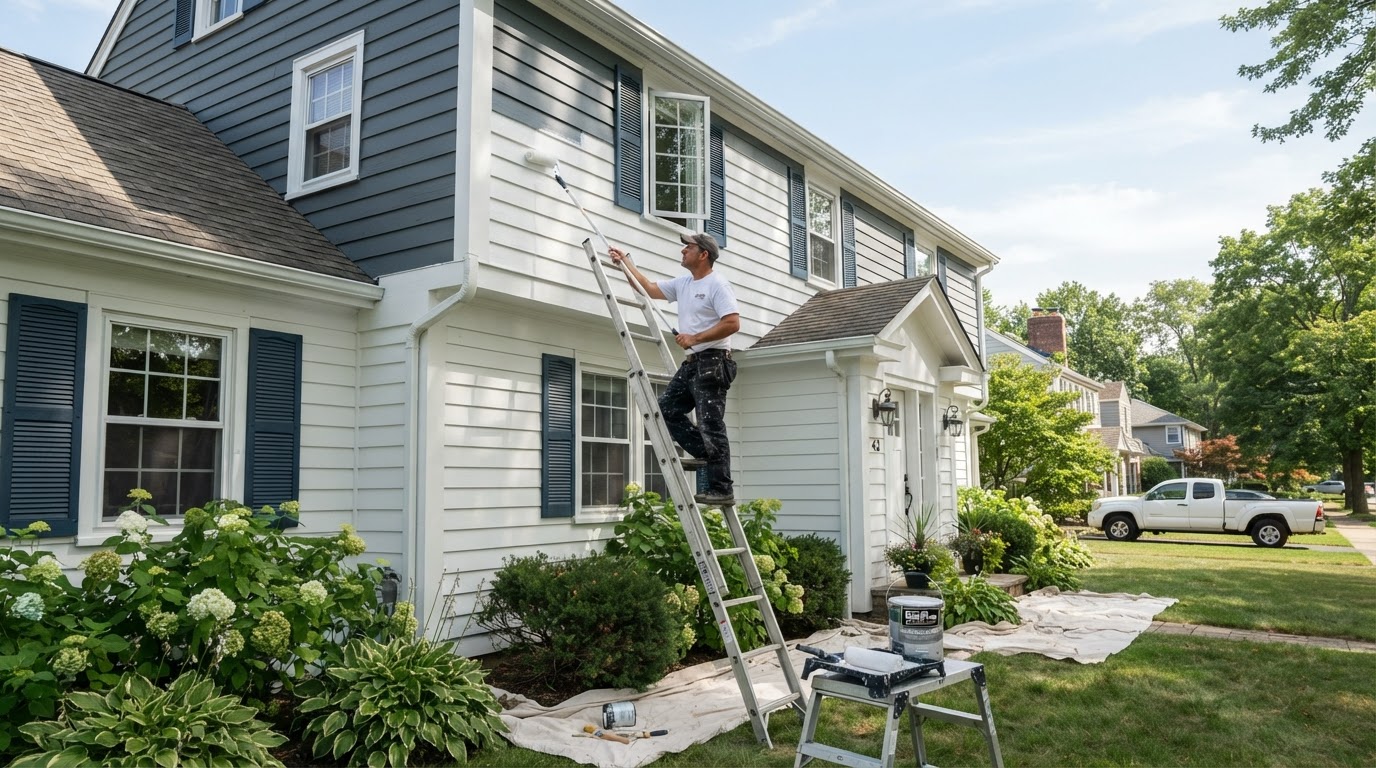
After washing and scraping, painters inspect every board for soft or rotted sections. Damaged boards should be replaced, not painted over. Loose boards are re-fastened, and exposed nails are countersunk and filled.
Caulking the gaps where siding meets trim, windows, and doors prevents water intrusion. Back-priming any replacement boards—sealing the back face before installation—greatly improves longevity, especially on shingles.
Primers and Topcoats for Wood
An acrylic latex primer bonds well to clean wood and accepts latex topcoats. For siding with bleeding wood species like cedar or redwood, a stain-blocking primer prevents tannin bleed-through that discolors light paint.
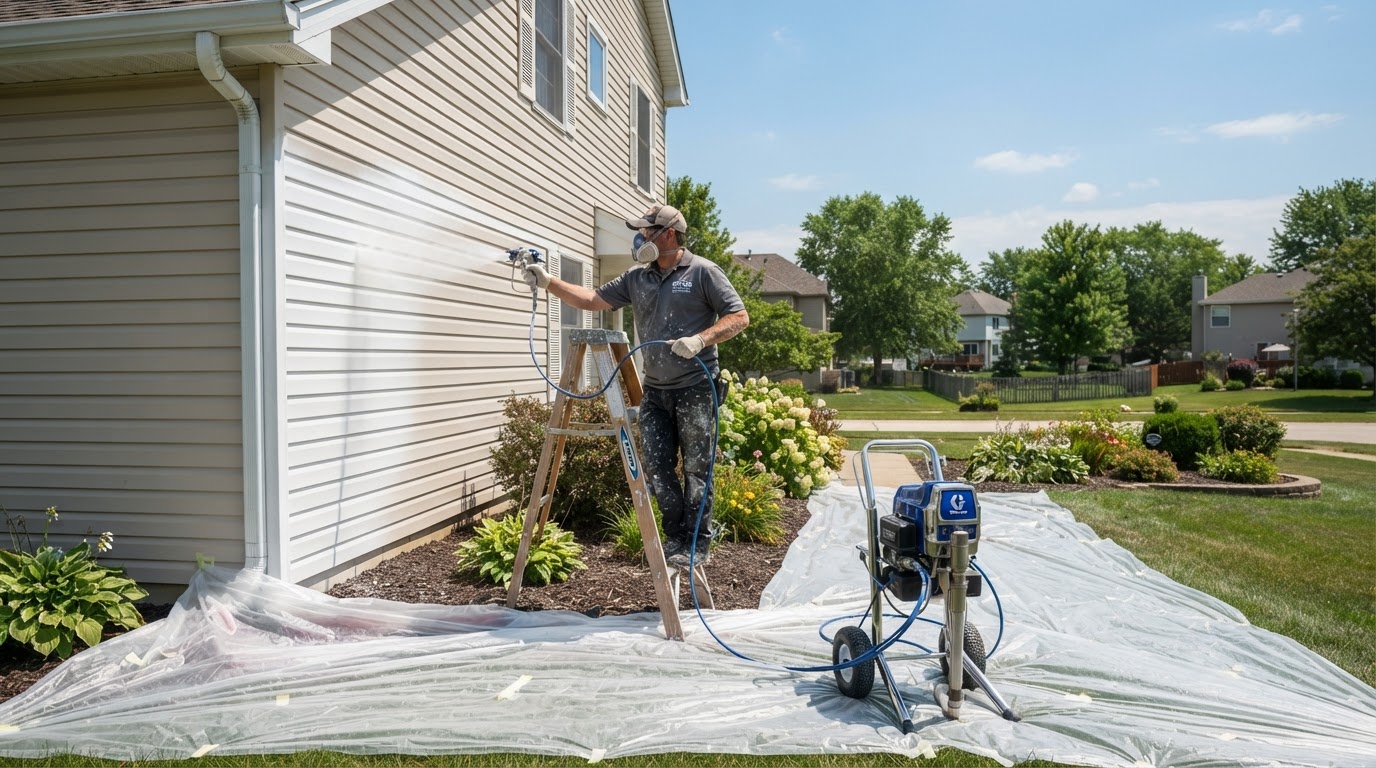
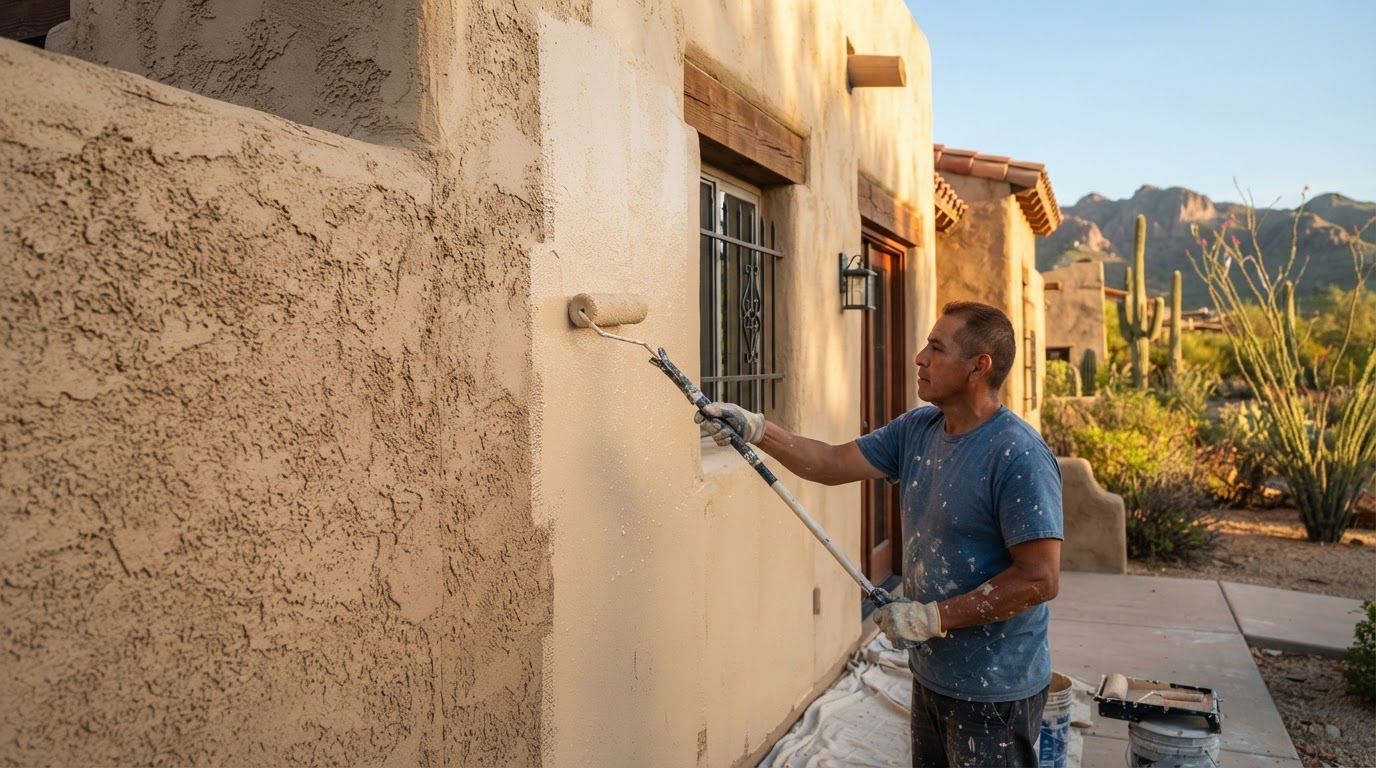
Two coats of a premium acrylic latex paint provide flexibility, color retention, and mildew resistance. Painters typically back-roll sprayed paint to drive product into the wood grain for stronger adhesion.
Maintenance That Extends the Coating
Inspect wood siding annually for peeling, cracking, or mildew. Promptly addressing small failures prevents water from traveling beneath the coating and damaging larger areas.
Find siding painting specialists in our directory who are experienced with wood substrates and the products that perform in your climate.