
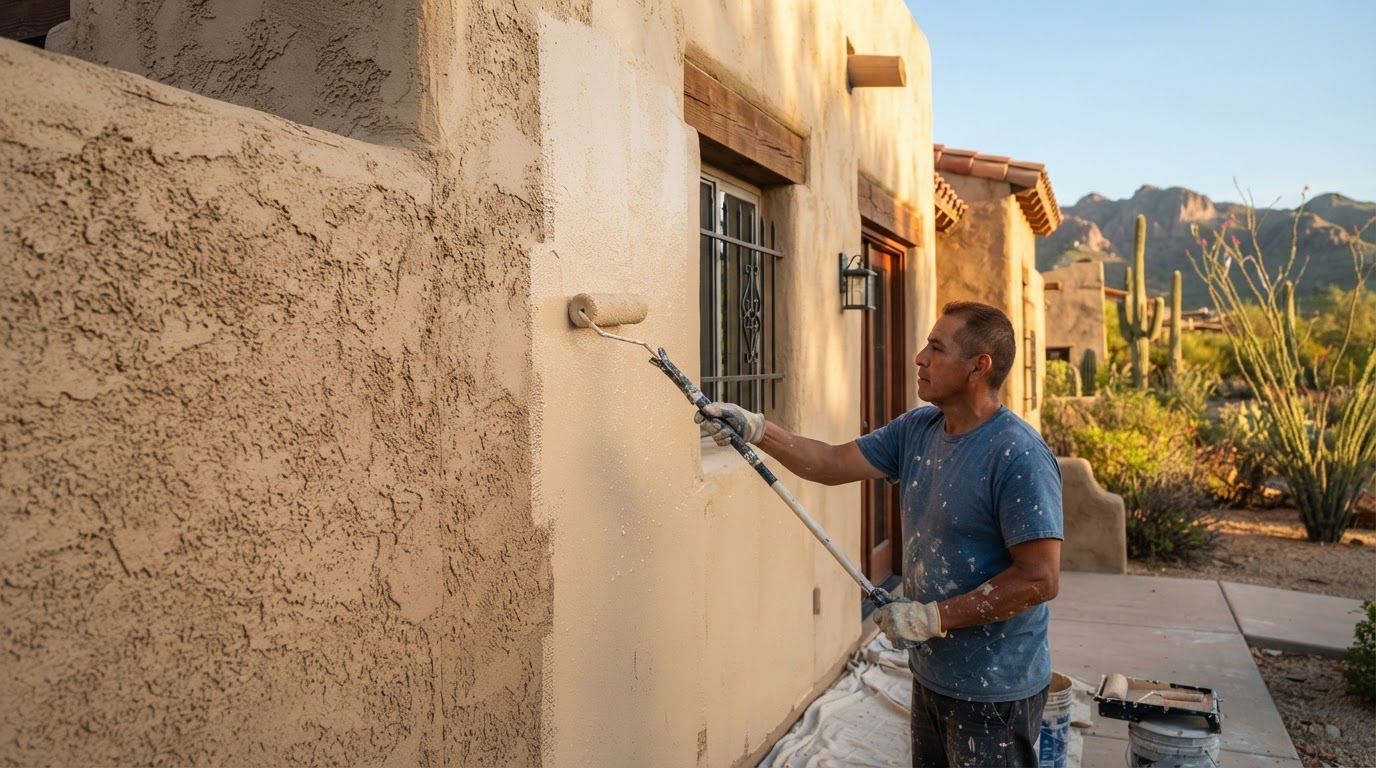
Stucco is porous and prone to cracking. The right prep and a breathable acrylic or elastomeric coating keep moisture out without trapping it inside the wall.
Why Stucco Demands a Different Approach
Stucco is a cementitious surface that is both porous and rigid. It absorbs water, and it develops hairline cracks as the structure moves. Coatings for stucco must therefore shed water while remaining breathable, allowing trapped moisture to escape rather than becoming trapped against the wall.
A coating that traps moisture can cause the stucco itself to deteriorate and can blister and peel. This is why choosing a product formulated for masonry is essential rather than using leftover siding paint.
Crack Repair and Cleaning
Before painting, painters clean the stucco thoroughly and repair cracks. Hairline cracks may be filled with an elastomeric patching compound, while wider cracks and damaged areas require more substantial patching with a stucco mix.
Any existing chalking—powdery residue on the surface—must be removed or sealed, because it interferes with adhesion. A power wash followed by thorough drying sets the stage for a durable finish.
Acrylic vs. Elastomeric Coatings
High-quality acrylic masonry paints offer good breathability, color retention, and a smooth finish suitable for most stucco in good condition. They are easy to apply and clean up with water.
Elastomeric coatings are thicker, more flexible, and bridge small cracks as they appear. They are the better choice for stucco with recurring hairline cracks or for walls exposed to driving rain. The trade-off is a heavier film build and a slightly more textured appearance.
Application and Lifespan
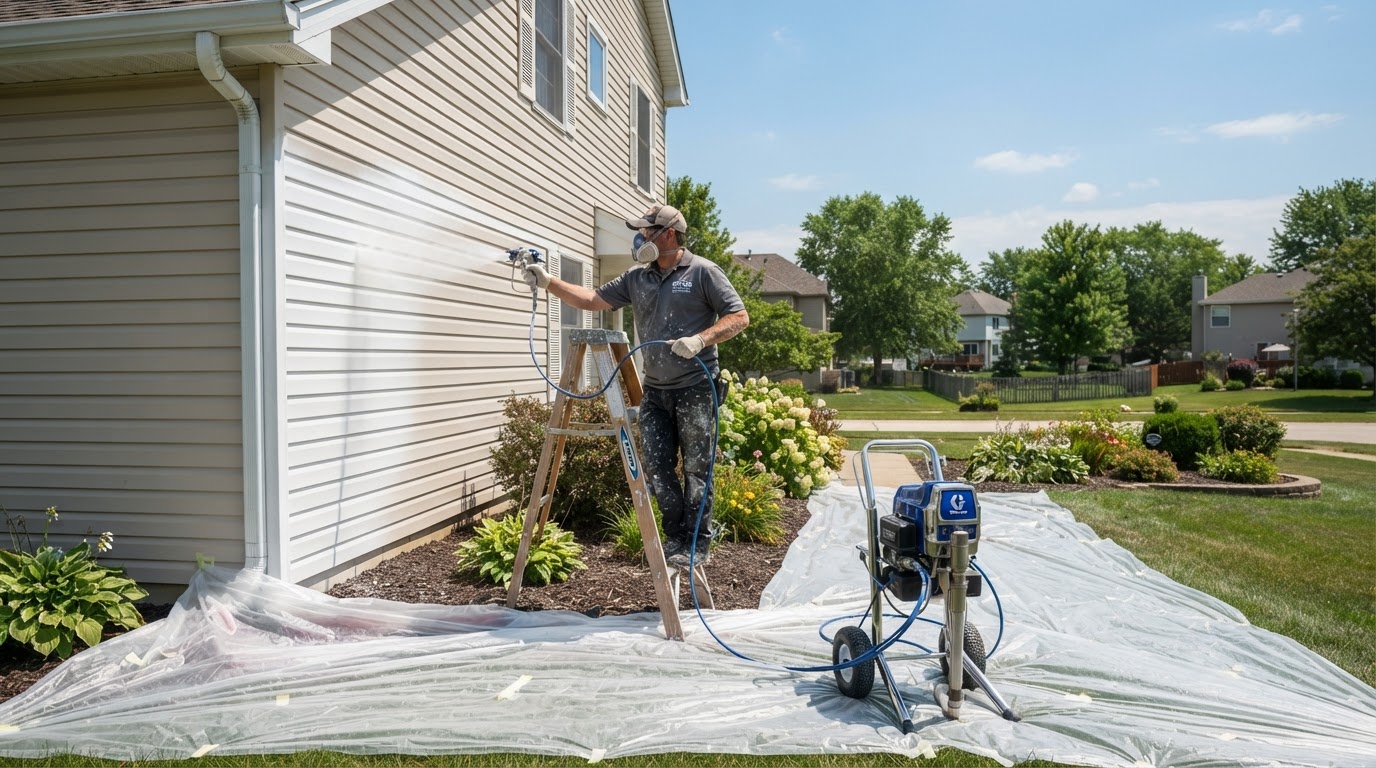
Both coatings are typically applied in two coats, often by spray and back-roll to fill the texture. Properly applied, a stucco coating system can last ten years or more.
Browse our directory for painting companies with masonry and stucco coating experience.