
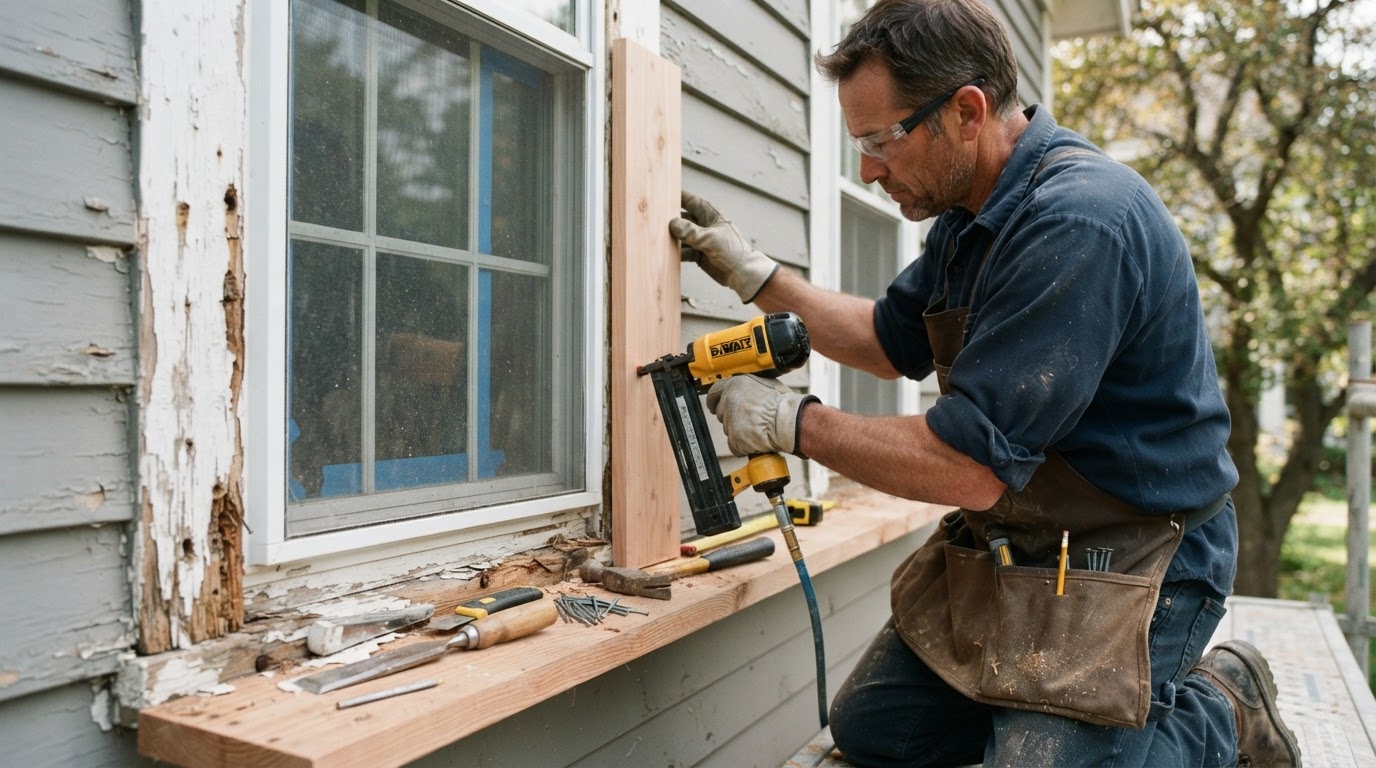
Painting over rotted trim hides the problem temporarily but guarantees failure. Learn how carpenters repair fascia, soffits, and window trim before painting.
Why You Cannot Paint Over Rot
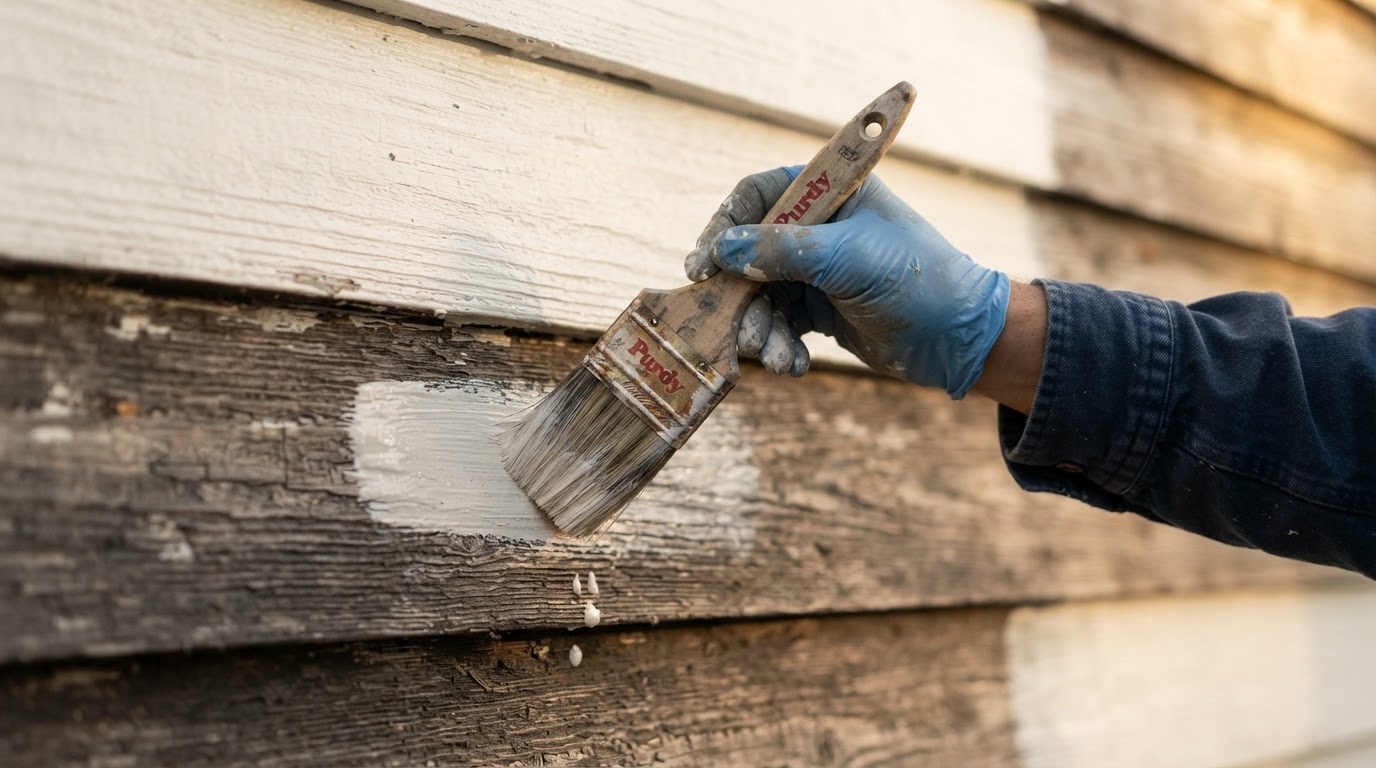
Rotted wood has lost its structural integrity. Paint applied over decay does not bond to sound material and will lift quickly as the rot continues to spread beneath it. More importantly, covering rot allows moisture damage to advance unseen into surrounding structure.
Proper repair means removing the compromised wood and restoring the substrate to a sound condition before any finish is applied.
Identifying Rot
Soft, spongy spots, discoloration, and flaking paint are signs of wood rot. Common trouble areas include fascia boards, soffits, window and door trim, and any horizontal surface where water can collect and penetrate.
A carpentry inspection during the estimation phase identifies rotted sections that need replacement rather than repainting, so the scope and cost are clear up front.
Repair Methods
Localized rot in trim is often addressed by cutting out the damaged section and splicing in a matching wood replacement, a process called a Dutchman repair. More extensive damage calls for full board replacement.
Epoxy fillers can rebuild small, detailed areas where replacing wood would be costly, but they are best for repairs rather than structural restoration. Once repairs are complete, the new and patched wood is primed and painted with the rest of the trim.
Preventing Future Rot
After repair, addressing the cause—failed caulking, poor drainage, or splash-back—prevents recurrence. Back-priming replacement trim and maintaining sealants at joints extends the life of both the wood and the paint.
Search our directory for painting companies that include exterior carpentry and wood repair in their services.