
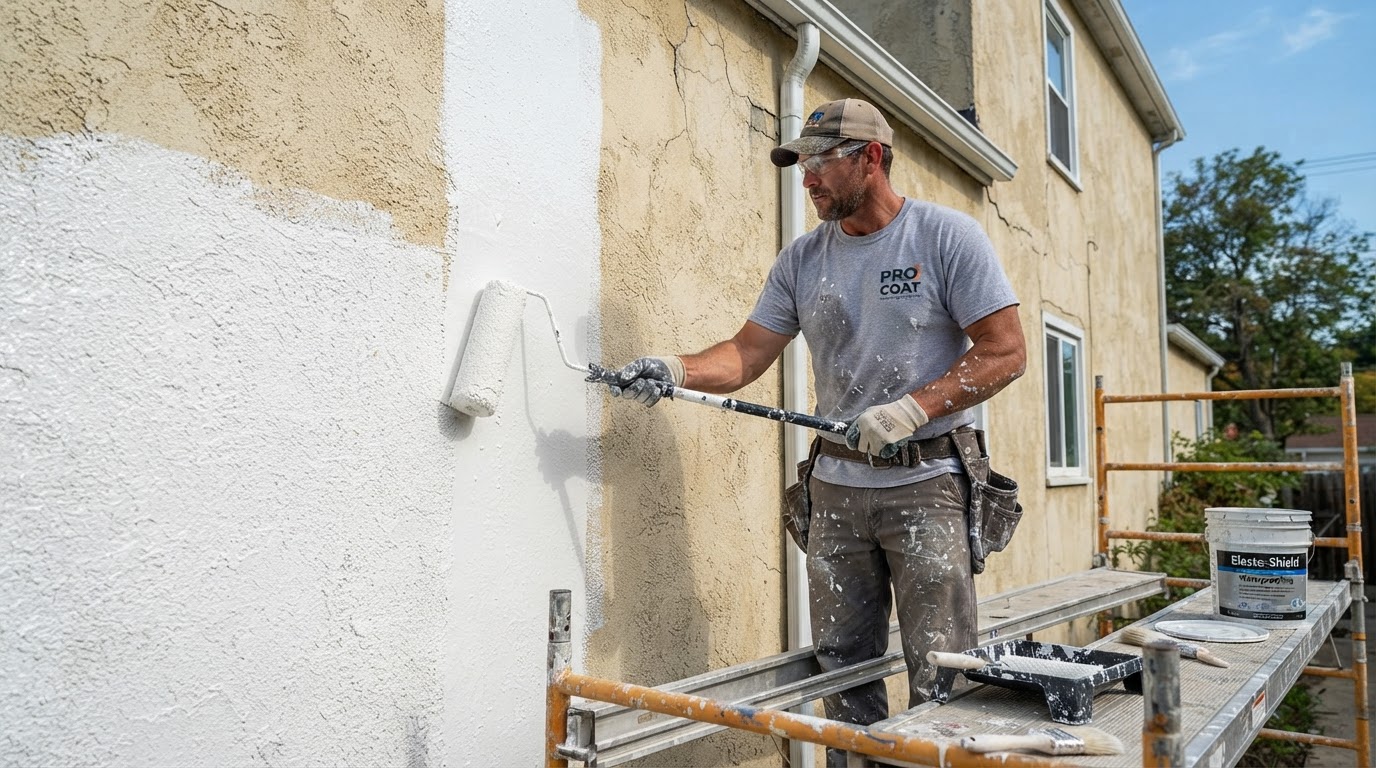
Elastomeric coatings bridge hairline cracks and shed driving rain. Learn where this thick, flexible coating is worth the investment—and where it isn't.
What Makes a Coating Elastomeric
Elastomeric coatings are high-build, flexible coatings formulated to stretch and contract with the substrate. They are applied in a thick film that bridges small cracks as the wall moves, maintaining a waterproof barrier where conventional paint would split.
This flexibility makes them especially effective on stucco, concrete block, and masonry walls that develop recurring hairline cracks.
When Elastomeric Is the Right Choice
Walls exposed to wind-driven rain, stucco with a history of hairline cracking, and masonry surfaces where waterproofing is a priority are strong candidates for elastomeric coatings. The coating's ability to bridge and reseal micro-cracks reduces water intrusion over time.
It is generally not necessary on surfaces in good condition with no cracking, where a standard acrylic masonry paint performs well at lower cost.
Breathability and the Trade-off
A quality elastomeric coating is waterproof but still breathable, allowing vapor to escape so moisture does not become trapped. Confirm the product specifies vapor permeability, since a non-breathable coating can cause coating failure and substrate damage.
The thicker film produces a slightly textured appearance and a heavier build, which is acceptable on most masonry but less suited to surfaces where a smooth finish is desired.
Application and Lifespan
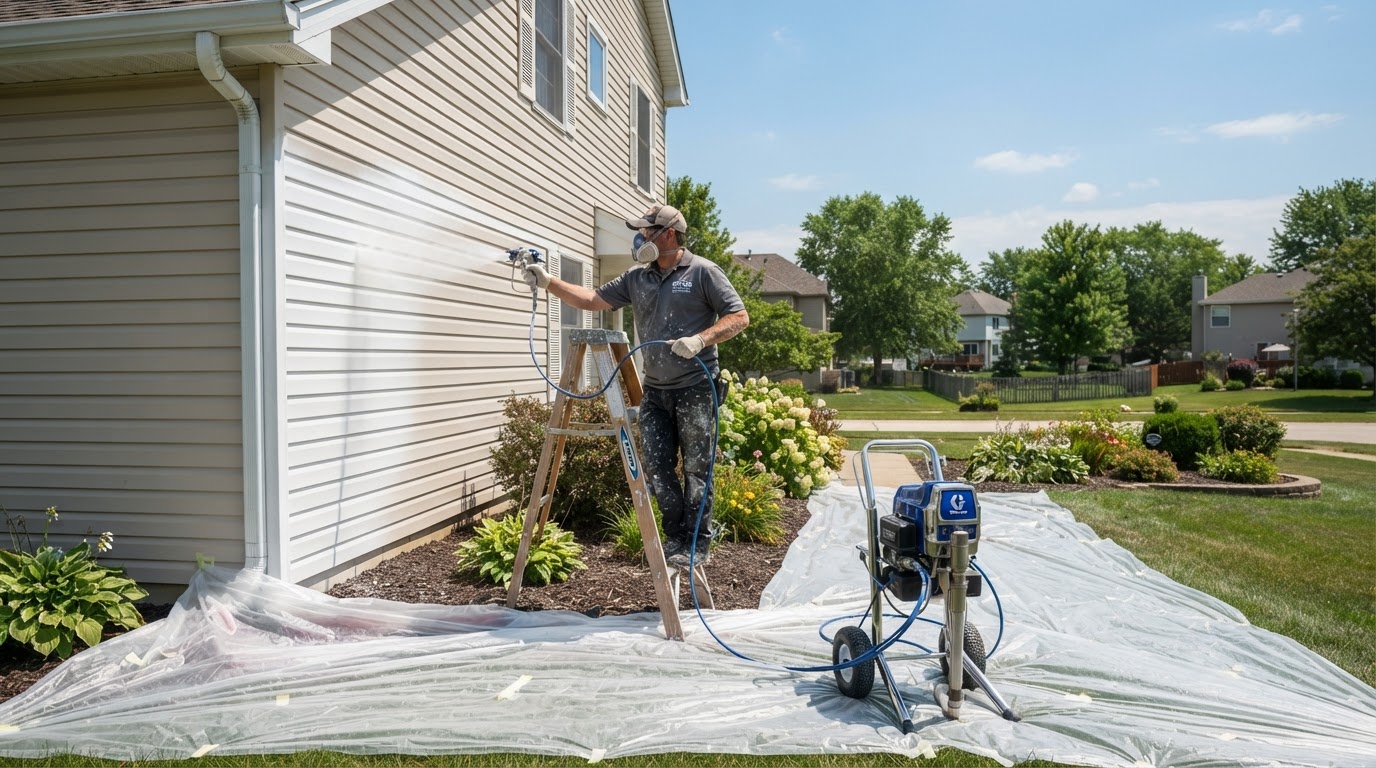
Elastomeric coatings are applied in two coats, typically by spray with back-rolling to ensure the film fills the surface texture. Properly applied, they can outlast standard masonry paint by several years.
Find protective coating specialists in our directory who work with stucco and masonry surfaces.